
Liberia Strengthens Agricultural Transformation Drive Through High-Level Engagement with Jigawa State Governor
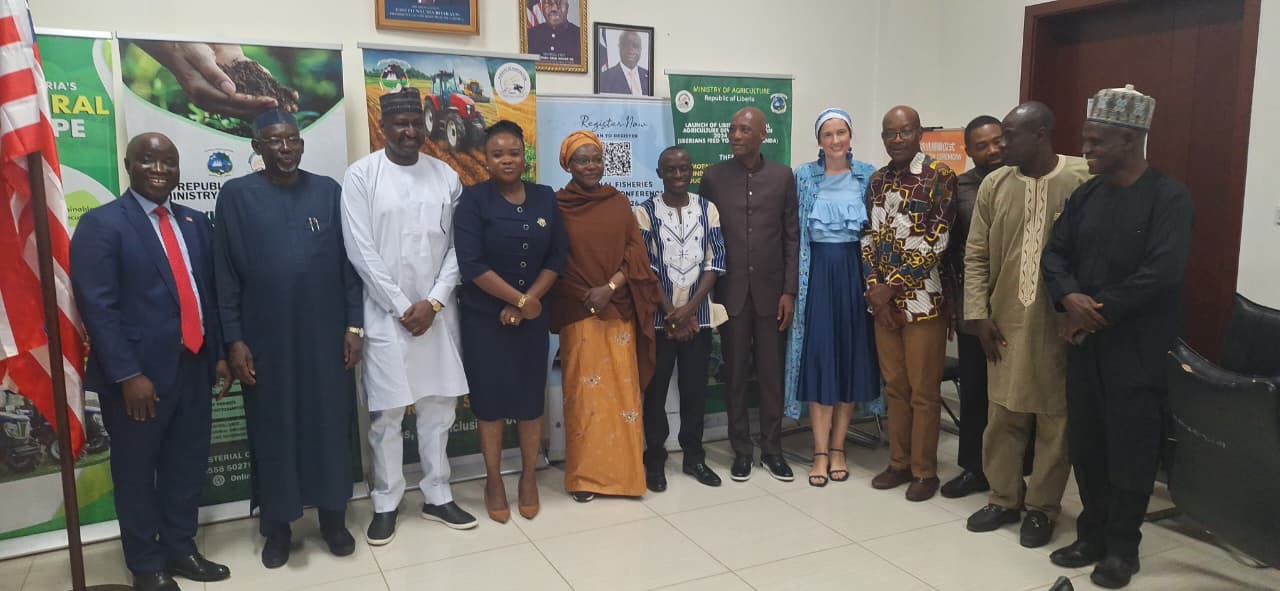
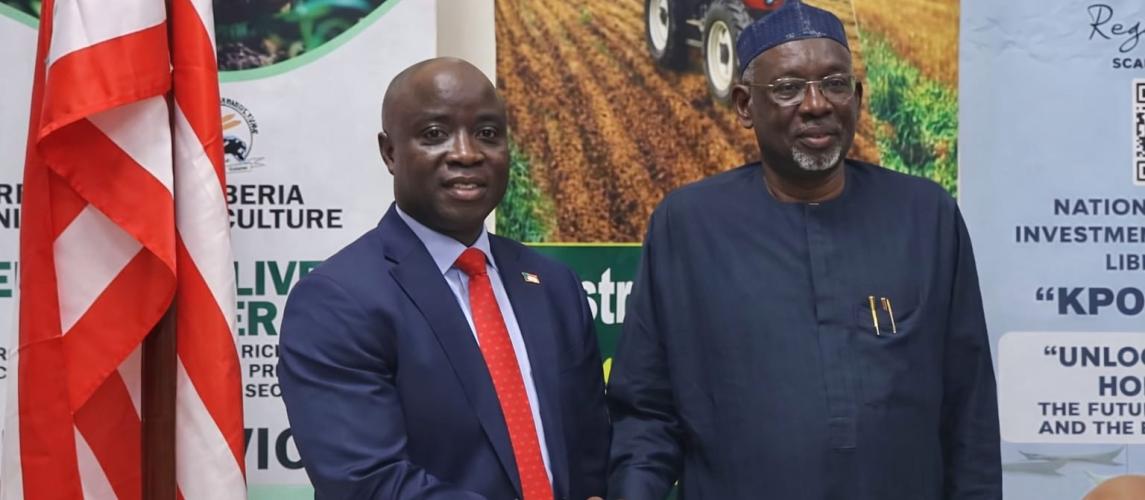
[Monrovia, Liberia, April 7, 2026] – The Ministry of Agriculture has hosted the Executive Governor of Jigawa State of the Federal Republic of Nigeria, His Excellency Umar Namadi, for a high-level engagement to strengthen cooperation and advance Liberia’s agricultural transformation agenda.
Jigawa State is one of Nigeria’s leading rice-producing states, with 80 to 85% of its population engaged in agriculture, making it a critical model for agricultural-led growth and food security.
The visit builds on ongoing technical exchanges between Liberia and Jigawa State, including a study visit by Liberian officials to Nigeria to assess successful approaches in rice value chain development. It also strengthens ongoing collaboration with development partners to boost food production and enhance food and nutrition security.
Welcoming the delegation, Minister of Agriculture Dr. J. Alexander Nuetah emphasized that the engagement comes at a critical time as Liberia intensifies efforts to modernize its agricultural sector.
He noted that while progress has been made, particularly in developing approximately 12,000 hectares of lowland for rice production over the past two years, significant challenges persist, including limited irrigation infrastructure, high land-preparation costs, weak market structures, and gaps in extension service delivery.
“We are committed to ensuring that agriculture works for Liberians, but this requires the right systems, the right investments, and strong partnerships.”
Dr. Nuetah further stressed the importance of building structured markets to sustain farmer productivity:
“When farmers produce and cannot sell, they become discouraged. We must build a system where farmers are assured of a market for their produce.”
He added that the Ministry is actively working to strengthen extension services across agricultural districts and clans, expand mechanization centers, and improve value addition in key food-producing counties, including Lofa, Nimba, and Bong.
During the engagement, Governor Namadi shared practical insights from Jigawa State’s transformation, underscoring the importance of structured government support.
“We need to understand that agriculture, even in developed countries, is subsidized. If you want to do agriculture, you must subsidize it—but it must be structured in a way that supports farmers without making them lazy.”
He explained that Jigawa’s success has been driven by the alignment of extension services, input delivery, mechanization, irrigation, and market systems, resulting in rapid growth in production. The state expanded cultivated land from 70,000 hectares to over 370,000 hectares within two years, while increasing yields from 1–2 tons per hectare to about 4 tons per hectare, with some farmers achieving up to 8 tons per hectare.
Reinforcing the importance of a holistic approach, he noted:
“Agriculture only works when all the pieces come together—extension, inputs, mechanization, and markets.”
He further emphasized the importance of market systems, adding, “Production without a market is failure. Farmers must be assured that what they produce will be sold.”
As part of the engagement, a technical team from Jigawa State is expected to undertake field visits to key rice-producing areas in Liberia, including major rice processing facilities in Lofa County, to deepen knowledge exchange, assess local systems, and identify practical interventions to enhance productivity and value addition.
Governor Namadi reaffirmed his commitment to continued collaboration to support Liberia’s agricultural transformation agenda.:
“We are ready to share our experience and work with Liberia to ensure agriculture delivers real results, food security, jobs, and economic growth.”
The engagement marks an important step in strengthening regional cooperation and advancing practical, scalable solutions to improve food production and resilience across West Africa.
### END ###
